How to mic drums: the right microphones for live and studio
Drums are the most complicated instrument on stage: up to ten mics, loud cymbals bleeding into everything, and a kick sound the whole mix depends on. Here’s what I’ve learned over the years behind the kit, in the studio and as a backliner, plus concrete microphone picks for every budget.
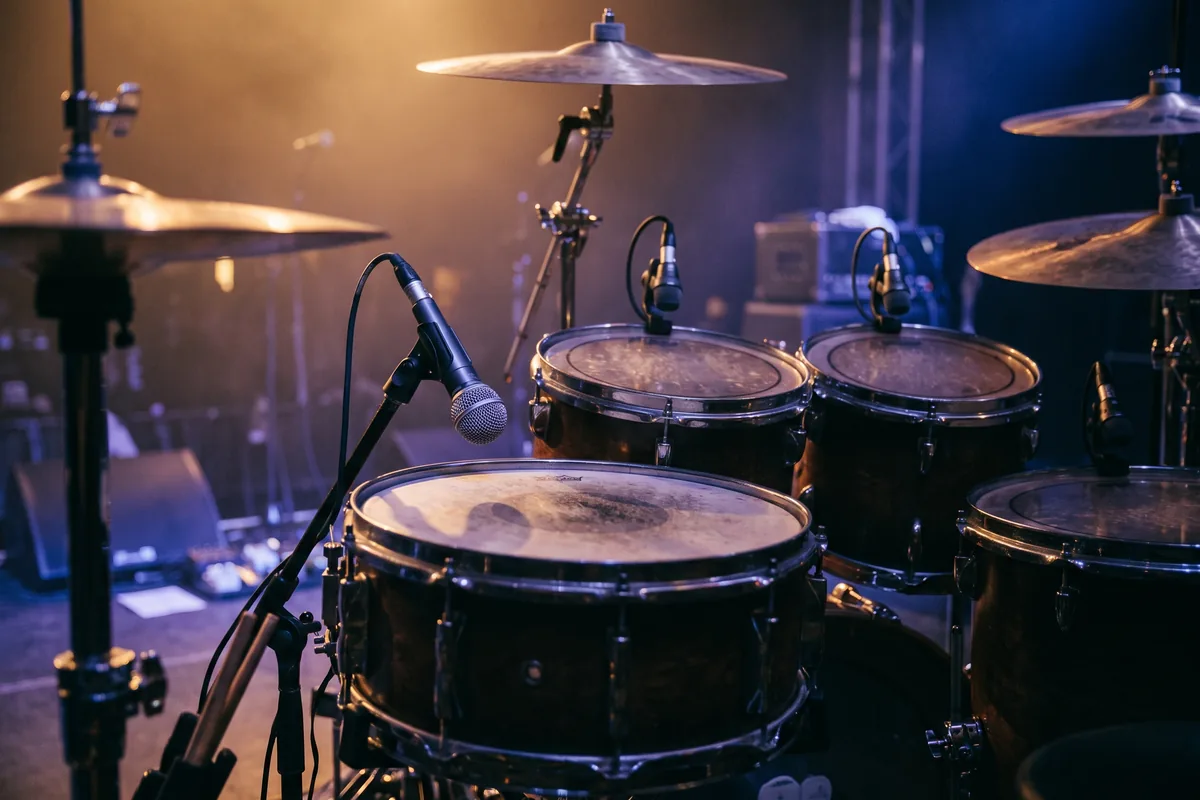
The basics: which positions you need
How many mics you need depends on the room, the style of music and your budget. Three setups cover almost everything:
- Minimal (3–4 mics): kick, snare and a pair of overheads. Enough for small clubs, rehearsal recordings and jazz. Legendary in the studio as the “Glyn Johns” method.
- Standard (7–9 mics): kick, snare, 2–3 toms, hi-hat, two overheads. This is what most engineers expect live.
- Large (10+ mics): kick in and out, snare top and bottom, all toms, hi-hat, ride, overheads and room mics in the studio.
Important for your stage plot and input list: every drum mic is its own channel on the desk. Drums usually take the first channels, with the kick on 1.
Live microphones
Live, it’s all about separation, durability and a fast setup. Dynamic mics close to the heads, condensers only for cymbals. Prices are rough guides (street prices, autumn 2026) and vary by retailer.
Budget Total approx. €350–500
| Position | Microphone | Price | Why |
|---|---|---|---|
| Kick | Shure PGA52 | approx. €80 | Solid punch for little money and forgiving on placement. |
| Snare | Shure SM57 | approx. €100 | The standard on every stage in the world. Don’t save money here. |
| Toms | Shure PGA56 | approx. €70 each | Compact with a clamp, fits even on crowded kits. |
| Overheads | Behringer C-2 (Paar) | approx. €60 / pair | Small-diaphragm condensers for cymbals and the overall picture. Needs phantom power. |
| Alternative | Shure PGA Drumkit 7 (Set) | approx. €400 | Kick, snare, 3 toms and 2 overheads in a case, clamps included. |
Mid-range Total approx. €1,000–1,400
| Position | Microphone | Price | Why |
|---|---|---|---|
| Kick | Shure Beta 52A oder Audix D6 | approx. €180–220 | Beta 52A for natural punch, D6 for the modern rock and metal kick with lots of click. |
| Snare | Shure SM57 oder Beta 57A | approx. €100–150 | The Beta 57A gives a bit more top end and better rejection of the hi-hat. |
| Toms | Sennheiser e604 | approx. €120 each | Clamps right onto the rim, sounds full and is almost indestructible. |
| Hi-hat | Røde NT5 | approx. €180 | Clear hi-hat without snare mush. From above, pointing to the edge. |
| Overheads | Røde NT5 (Paar) | approx. €350 / pair | The workhorse overhead pair, live and in the studio. |
Pro Total from approx. €2,500
| Position | Microphone | Price | Why |
|---|---|---|---|
| Kick inside | Shure Beta 91A | approx. €230 | Boundary mic on the pillow: attack and click without a stand. |
| Kick outside | Audix D6 oder Shure Beta 52A | approx. €180–220 | Together with the Beta 91A this is the classic two-mic kick of big tours. |
| Snare | Beyerdynamic M 201 TG | approx. €250 | Hypercardioid with a very dry, precise snare sound and great separation. |
| Toms | Sennheiser MD 421 Kompakt | approx. €300 each | The classic tom mic, now smaller and more stage-friendly than the original. |
| Hi-hat | Neumann KM 184 | approx. €550 | Detailed and open without getting harsh. |
| Overheads | Neumann KM 184 (Paar) | approx. €1,100 / pair | Reference small-diaphragm pair for cymbals, common on big stages too. |
Studio microphones
In the studio it’s about the overall sound. Overheads and room mics often make up 60 to 70 percent of the drum sound; the close mics add definition and punch.
Budget Total approx. €450–600
| Position | Microphone | Price | Why |
|---|---|---|---|
| Kick | AKG D112 MKII | approx. €150 | The classic studio kick mic with a deep low end. |
| Snare | Shure SM57 | approx. €100 | In the studio too, the snare mic on countless hit records. |
| Toms | Sennheiser e604 oder Shure SM57 | approx. €100–120 each | Two tom mics are often enough to start with. The floor tom comes through the overheads. |
| Overheads | Røde M5 (Paar) | approx. €170 / pair | Affordable, well-matched pair for stereo overheads. |
| Room | Behringer C-1 | approx. €50 | One large-diaphragm mic 2–3 m in front of the kit adds room and weight. |
Mid-range Total approx. €1,800–2,500
| Position | Microphone | Price | Why |
|---|---|---|---|
| Kick inside | Shure Beta 91A | approx. €230 | Attack from inside the shell. |
| Kick outside | Audix D6 | approx. €200 | Depth and punch in front of the reso head. |
| Snare top/bottom | Shure SM57 + Sennheiser e604 | approx. €220 | Bottom mic for the snare wires. Don’t forget to flip the polarity. |
| Toms | Sennheiser MD 421 Kompakt | approx. €300 each | Full, round tom sound with a bass roll-off switch. |
| Overheads | AKG C214 (Paar) | approx. €650 / pair | Large-diaphragm pair with a nice sheen on cymbals. |
| Room | Røde NT1 (Paar) | approx. €450 / pair | Stereo room for size, great when mixed in compressed. |
Pro Total from approx. €7,000
| Position | Microphone | Price | Why |
|---|---|---|---|
| Kick inside | AKG D12 VR | approx. €400 | Switchable character from vintage to modern. |
| Kick outside | Neumann U 47 fet | approx. €3,500 | The studio standard for depth and size in front of the kick. |
| Snare | Shure SM57 + Beyerdynamic M 201 TG | approx. €350 | Two dynamic mics on top, weighted per song in the mix. |
| Toms | Sennheiser MD 421-II | approx. €400 each | The original, the go-to tom mic for decades. |
| Overheads | Coles 4038 (Paar) | approx. €2,600 / pair | Ribbon mics for warm, natural cymbals with a vintage feel. |
| Room | Neumann U 87 Ai | approx. €3,000 | Big, smooth room sound, alone or as the mid of an M/S setup. |
Placement: 7 tips from the road
- Kick: Start with the mic in the port of the reso head, 5–10 cm inside the shell. Further in means more attack, further out more body.
- Snare: 3–5 cm above the head, aimed at the centre, back of the mic towards the hi-hat. That keeps the most hi-hat out of the snare channel.
- Toms: 3–5 cm above the rim, angled to the centre. Not too close to the rim or it sounds thin.
- Hi-hat: 10–15 cm above the top cymbal, towards the edge and away from the snare. Watch out for the air puff when it opens.
- Overheads: Measure the distance from both overheads to the snare with a cable or tape. Same distance = no phase problems.
- Check phase: Always compare snare bottom and kick in/out with the polarity button. If it sounds fuller with the button pressed, leave it in.
- Tune before you mic: No mic in the world saves a badly tuned kit. New heads and 10 minutes of tuning do more than any upgrade.
In-ear guide: from wedges to in-ears in 7 steps
The 7 steps to your first in-ear setup, who needs what in their mix and the show day check. Free PDF.
Drum miking FAQ
How many microphones do I need for a drum kit?
Four mics (kick, snare and two overheads) already make a kit sound good live and in the studio. A standard setup for a 5-piece kit uses 7 to 9 mics: kick, snare, 2–3 toms, hi-hat and two overheads, often plus room mics in the studio.
What’s the best microphone for snare?
The Shure SM57 has been the standard for decades, live and in the studio. If you want more separation and a drier sound, go for the Beyerdynamic M 201 TG.
Do I need condenser mics for overheads?
Usually yes. Condensers capture cymbals in more detail. They need 48 V phantom power from the desk or interface.
What’s the difference between live and studio drum miking?
Live it’s about separation and durability: mics close to the source, little bleed, fast setup. In the studio it’s about the overall sound: more room and overhead, more sensitive mics and more time for placement and phase.
Links to shops may be affiliate links. If you buy through them, we get a small commission. The price stays the same for you. As an Amazon Associate I earn from qualifying purchases.
Put your drum channels straight into your stage plot
Add kick, snare, toms and overheads with channel and mic, and the input list builds itself.
Create a free stage plot